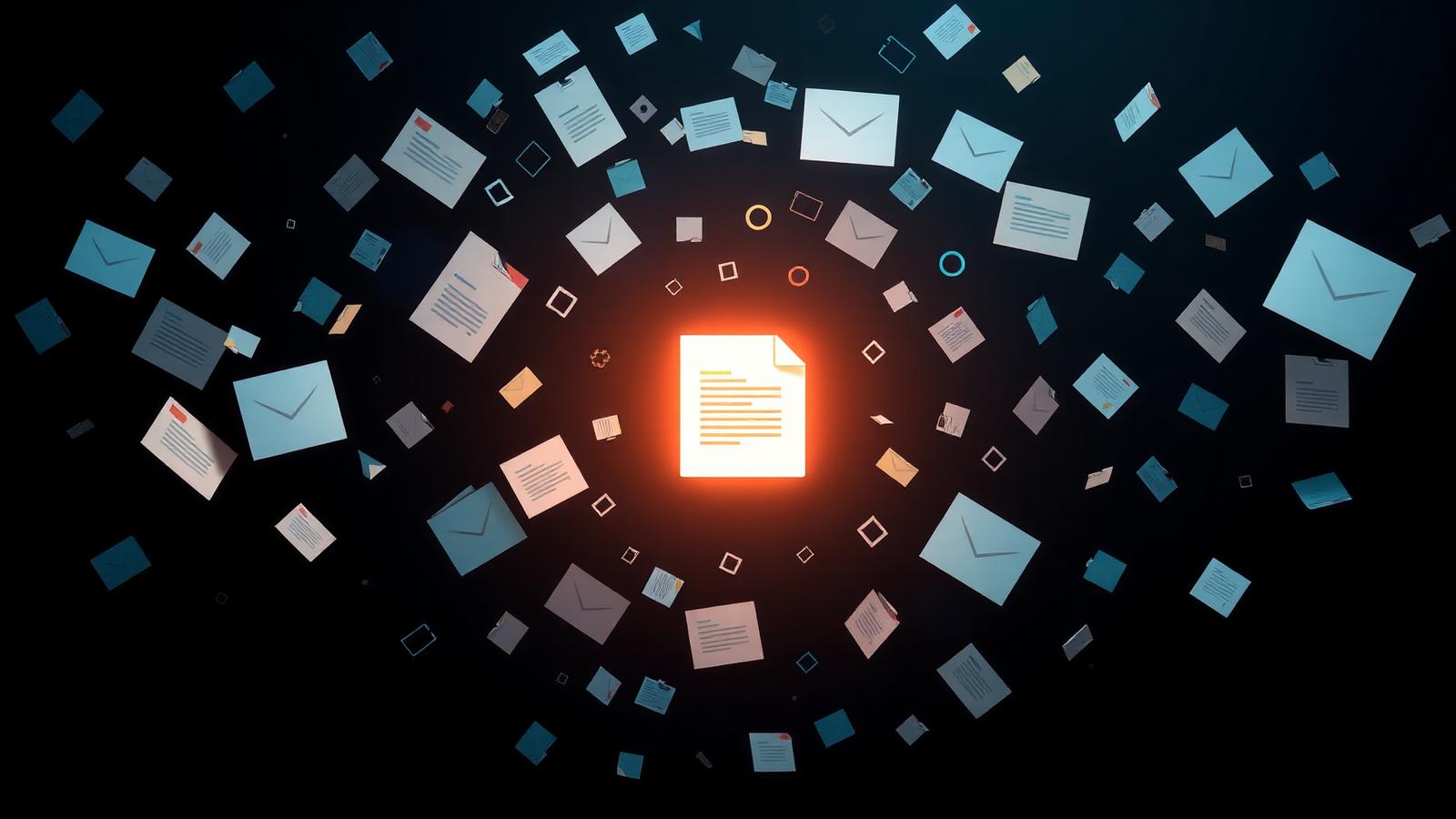
The show is in nine days. The tour manager opens her inbox to a thread titled Re: Re: Fwd: Re: Advancing — Budapest, and it is thirty-eight messages deep. Somewhere in the middle sits the rider — version three, or possibly version four, it is hard to tell. The promoter has replied to version two. The production manager is quoting version one. A stagehand has been CC'd on nothing.
This is not a horror story. This is a Tuesday.
Advancing — the process of confirming every technical, hospitality and logistical detail before a show — is the quiet backbone of live entertainment. When it works, no one notices. When it fails, the audience never knows, but the crew remembers for years. And for an industry that produces some of the most sophisticated cultural experiences on the planet, we still coordinate it the way accountants coordinated invoices in 2004.
The workflow no one designed
Advancing did not evolve. It accumulated. Email became the default because email was already there. PDFs became the artefact because PDFs already existed. WhatsApp filled the gaps because WhatsApp was faster than opening a laptop. Nobody sat down and designed this system. It is a series of workarounds that hardened into a workflow.
The result is a coordination model built on four fragile assumptions:
- Everyone reads every email.
- Everyone downloads the latest attachment.
- Everyone knows which version is current.
- Everyone remembers the side-conversations that never touched the thread.
Any production professional reading this list is already smiling, because none of those assumptions have ever been true.
What actually happens
Here is what a typical advancing cycle looks like from the inside:
- The promoter sends an initial rider request in a fresh email thread.
- The tour manager replies with the current technical rider PDF.
- The production manager replies-all with a different, slightly older PDF, because that is the one saved on their desktop.
- The lighting designer joins the thread ten days later and asks a question that was answered in message four.
- Someone opens a parallel WhatsApp group “just for quick things”.
- The hospitality rider is updated, but only in a Google Doc that three people can access.
- Two days before load-in, someone realises the backline order was based on the wrong version.
Every step of this is normal. Every step of this is broken.
The problem is not that people do not care. The problem is that the tools they have make it impossible for care to survive contact with reality.
The hidden costs
Email-driven advancing costs money long before anyone sees a line item. It costs it in:
- Wrong backline. A guitar amp swapped between rider versions. A drum kit spec that changed on Tuesday but reached the rental house on Friday.
- Forgotten hospitality. Dietary requirements listed in message twelve, never carried into the venue's catering order.
- Overtime. Crews troubleshooting mismatches on the day of the show because the source of truth turned out to be someone's memory.
- Trust. Every mistake makes the next promoter more cautious, the next artist more suspicious, the next tour manager more defensive.
A senior production manager once told us: "Every tour has a budget line for chaos. We just don't call it that." That line item is the cost of a workflow that was never designed.
Why we keep doing it anyway
If the pain is this obvious, why does the industry not simply switch? Three reasons come up over and over.
1. Email feels safe
Email is universal, archived, forwardable, printable, and it survives every technology cycle. Nobody was ever fired for sending an email. That safety is real — but it is the safety of a paper trail, not the safety of an accurate plan.
2. Version control is invisible
A touring team can juggle five open advancings across three continents. Which rider version is current on which show is a question the human brain is not built to answer, and email does not answer it either. Version drift is invisible until it is expensive.
3. Every show is a first date
The promoter, the venue, the artist, the crew often meet for the first time on the day of load-in. Advancing is the courtship. Doing it well signals competence. Doing it in a shared, structured system feels — bizarrely — less personal than doing it in a long, warm email. It is not less personal. It is more professional. But the industry has confused warmth with wordiness.
What good looks like
The teams who have moved past email advancing tend to describe the change the same way: "We stopped talking about the rider and started working on it together."
Good advancing has a few characteristics:
- One live document, not attachments. The rider is a place, not a file.
- Change history, not thread archaeology. You can see what changed, when, and by whom, without reading forty emails.
- Role-based visibility. The lighting designer sees lighting. Hospitality sees hospitality. Nobody has to scan a wall of information to find their two lines.
- Confirmation, not assumption. Every element has a state: proposed, confirmed, changed. Silence is not consent.
- A single link that always resolves to the current truth.
This is not futuristic. It is simply what any other industry running complex logistics already takes for granted.
The generational shift
A new generation of tour managers, production coordinators and promoter reps is entering the industry with different defaults. They grew up in shared documents, in project boards, in real-time collaboration. Email is not their native language. When they meet the email-thread workflow, they do not accept it as tradition. They see it as friction.
The industry is not going to abandon email — email will remain the transport layer for introductions, contracts, and legal notices. But the operational work of advancing is quietly moving off it, and the shows that suffer least in the next five years will be the ones that moved earliest.
A practical path forward
If your team is still running advancing through email threads, three moves make an outsized difference:
- Pick one show and pilot a shared rider workspace. Not the whole tour. Not the whole season. One show. Measure how many emails you did not send.
- Standardise the shape of your rider. Even in a document, structure beats prose. Sections, states, owners.
- Kill the parallel WhatsApp group. Or accept it, and mirror every decision into the shared workspace within twenty-four hours. Chaos loves side channels.
Where Startion fits
Startion's StageRider workflow app was built for exactly this problem. It replaces the email-thread rider with a shared production workspace where artists, tour managers, promoters and venues collaborate on the same live document — with version history, role-based visibility, and a single link that always shows the current truth of the show.
It is not another PDF generator. It is the shared production context the industry has been improvising toward for twenty years.
If you have ever ended an advancing cycle exhausted rather than confident, that exhaustion is not a personal failing. It is the workflow. And the workflow can change.